How to Order Custom Printed Materials for Spring Events: 7-Step Planning Guide 2025
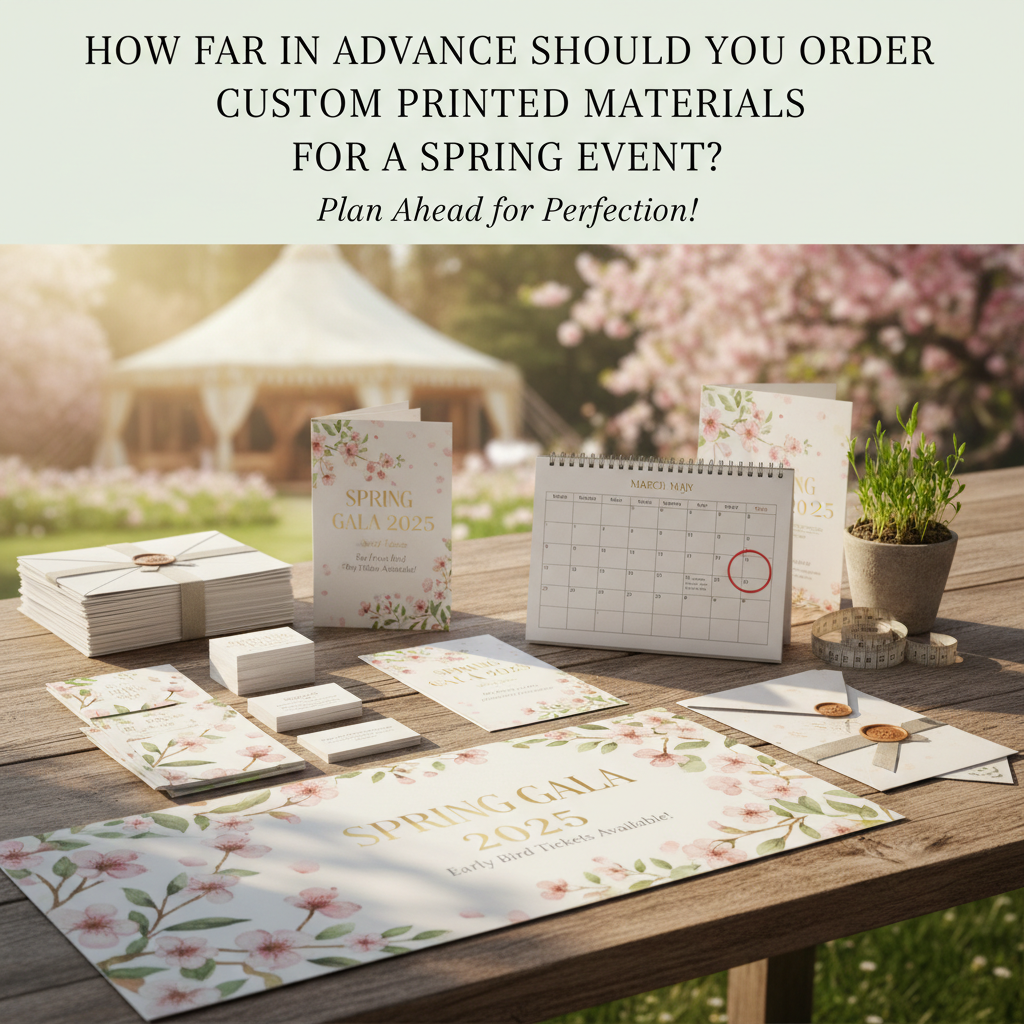
Ordering custom printed materials for a spring event requires 8-12 weeks of advance planning to ensure quality results and avoid rush order fees. This comprehensive timeline allows proper coordination between your marketing team, graphic designer, and printing company while accounting for design revisions, proof approval, and shipping considerations. According to the Specialty Graphic Imaging Association (SGIA, 2024), 68% of event planners who order materials 10+ weeks in advance report higher satisfaction with final products compared to those placing orders within 4 weeks of their event date.
Before You Begin: Prerequisites Checklist
- Confirmed Event Date: Lock in your spring event, trade show, or conference date before starting the print order planning process
- Approved Budget: Secure budget approval for promotional material production including contingency funds (15-20% buffer)
- Design Assets: Gather logos, brand guidelines, and existing marketing collateral for consistency
- Vendor Research: Identify 3-5 potential print shops or promotional products companies for comparison
- Material List: Draft preliminary list of needed items (banners, posters, flyers, brochures, custom apparel)
- Venue Requirements: Confirm any size specifications or mounting requirements from your event location
Skill Level: Intermediate | Time Required: 8-12 weeks | Cost Range: $500-$15,000+ depending on volume and materials
Step 1: Determine Your Material Needs (16-20 Weeks Before Event)

Begin event materials planning by creating a comprehensive inventory of all printed and promotional items needed for your spring event. The event planner should collaborate with the project manager and marketing team to identify every touchpoint requiring branded materials.
Action Items for Material Assessment
- Conduct venue walkthrough: Visit your spring festival, outdoor event, or conference location to identify signage needs, display assembly requirements, and outdoor durability considerations
- List all material categories: Separate items by type including event signage (banners, posters, yard signs), promotional materials (flyers, brochures), custom merchandise (t-shirts, tote bags), and event collateral (name badges, programs, tablecloths)
- Determine quantity requirements: Calculate attendee projections plus 15-20% buffer for promotional product lead time variations
- Specify size specifications: Measure display areas and record exact dimensions for custom banner timeline planning
- Note finish options: Identify weather considerations for outdoor spring events requiring lamination, coating choices, or UV-resistant materials
According to PrintIndustry.com (2024), the most common spring event materials ordered include vinyl banners (72% of events), retractable banner stands (58%), promotional flyers (81%), and custom t-shirts (45%). For a typical spring trade show booth, budget $2,500-$5,000 for complete event branding materials.
Step 2: Research and Select Print Vendors (12-16 Weeks Before Event)
Vendor selection significantly impacts your custom printing timeline and final product quality. The print production manager or procurement specialist should evaluate multiple suppliers based on production capacity, turnaround time, and spring promotional campaign printing timeline recommendations.
Vendor Evaluation Criteria
| Evaluation Factor | What to Assess | Recommended Standard |
|---|---|---|
| Standard Lead Time | Digital printing, offset printing, screen printing turnaround | 5-7 business days minimum |
| Rush Order Options | Expedited production availability and associated costs | 2-3 day rush available |
| Proof Approval Process | Digital proof turnaround, revision rounds included | 24-48 hour proof delivery |
| Peak Season Capacity | March-May production capability for spring events | No seasonal delays |
| Shipping Method Flexibility | Ground, expedited, direct-to-venue delivery options | Multiple carrier options |
Request references from each print shop specifically related to spring trade show materials or seasonal event printing. Companies like Replica Printing specialize in event-focused production with experience managing tight spring campaign timelines and bulk printing requirements.
Step 3: Prepare Design Files and Specifications (10-12 Weeks Before)
File preparation time accounts for 15-25% of the total custom print turnaround timeline. Your graphic designer or art director must create print-ready design files meeting exact print specifications from your selected supplier.
Critical Design File Requirements
Technical specifications to confirm with printing company:
- File format: PDF, AI, or EPS with embedded fonts and images
- Resolution: Minimum 300 DPI for offset printing, 150 DPI acceptable for large-format banners
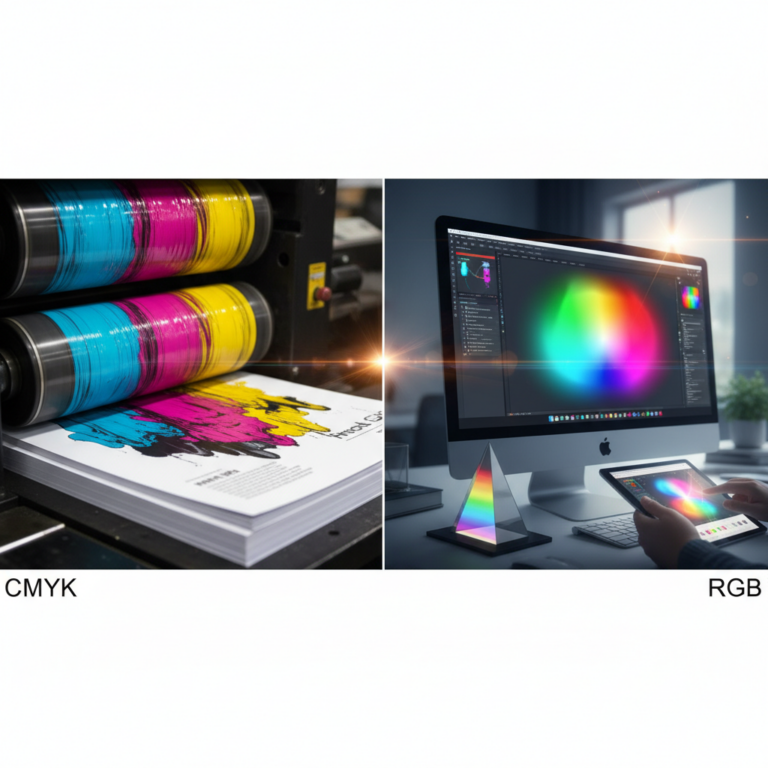
- Color mode: CMYK for print (not RGB); provide PMS color codes for color matching process accuracy
- Bleed area: Include 0.125″ to 0.25″ bleed beyond trim marks
- Paper stock selection: Choose paper weight (80lb, 100lb cover) and coating for promotional material timeline optimization
- Finishing options: Specify folding, binding, lamination, or embroidery service requirements
For complex projects involving multiple materials for a corporate event planner, create a master design file library with consistent branding elements. This reduces design revision time by 40% according to the Print Industries of America (2024 benchmarking data).
Step 4: Request Quotes and Compare Options (8-10 Weeks Before)
The sales representative from each vendor will provide printing quotes based on your specifications. Strategic timing for quote requests during advance ordering schedules ensures better pricing and production capacity allocation.
Quote Comparison Strategy
Request itemized cost estimates including:
- Per-unit pricing: Base cost for banners, posters, flyers, brochures at specified quantities
- Bulk order discounts: Tiered pricing for quantity increases (typically at 250, 500, 1000+ units)
- Setup fees: One-time charges for screen printing plates or offset printing press setup
- Shipping costs: Ground shipping versus expedited delivery timeframe options
- Rush fees: Premium charges if production timeline must be compressed
- Proof charges: Costs for physical proofs or multiple revision rounds
For a typical spring conference requiring 500 programs, 250 posters, 1000 flyers, and 3 vinyl banners, expect quotes ranging from $1,800 to $3,200 depending on paper quality and finishing. Budget planning should include 20% contingency for scope adjustments.
Step 5: Place Your Order with Production Timeline (6-8 Weeks Minimum Before Event)
The recommended lead time for spring event material ordering is 6-8 weeks minimum for standard production or 8-12 weeks for complex projects involving multiple vendors. This advance notice needed for spring event signage ensures adequate production schedule management during peak season printing periods (March through May).
Order Placement Best Practices
Submit complete order package including:
- Approved design files meeting all print specifications
- Signed purchase order with delivery date and shipping method confirmed
- Material selection documentation (paper stock, finishes, sizes)
- Distribution planning instructions for direct mail service or fulfillment center coordination
- Contact information for logistics coordinator and quality control specialist
For spring outdoor events (festivals, grand openings, product launches), specify outdoor durability requirements such as weather-resistant substrates, UV-protective lamination, and reinforced grommets for banner installation planning. According to event material ordering best practices published by the Event Marketing Institute (2024), ordering 10+ weeks in advance reduces rush order premiums by 35-50%.
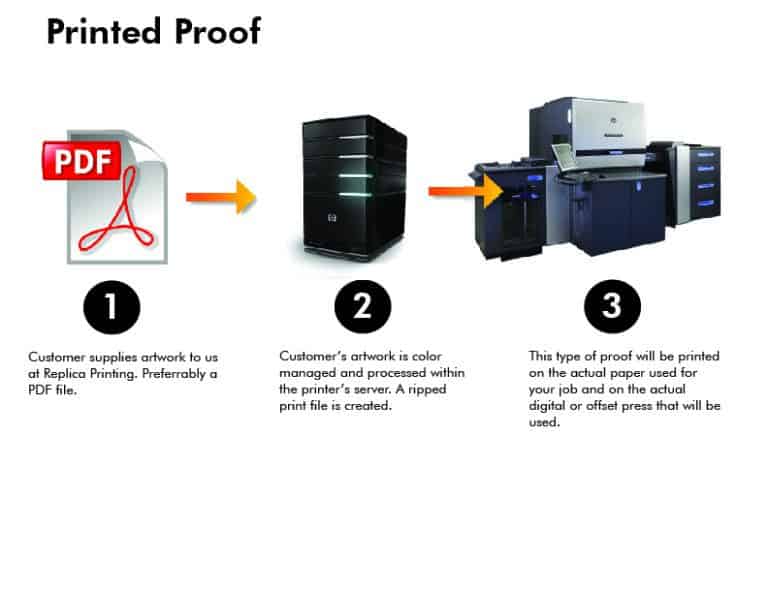
Step 6: Review Proofs and Approve Final Designs (4-6 Weeks Before)
The proof approval stage requires 3-7 business days depending on complexity and revision requirements. Your customer service representative will provide digital proofs for all materials before final production begins.
Proof Review Checklist
Verify these elements with your trade show coordinator or wedding planner:
- Content accuracy: Check all text for typos, dates, URLs, and contact information
- Color fidelity: Compare proof colors to brand guidelines (request physical color proof for critical matches)
- Image quality: Ensure photos and logos appear sharp without pixelation
- Size and scale: Confirm dimensions match venue requirements and display specifications
- Bleeds and margins: Verify no critical content falls in trim zones
Document all approved proofs with written sign-off from stakeholders. The print production manager should maintain this approval trail for quality assurance checks and to prevent production delays from late-stage changes.
Step 7: Coordinate Shipping and Delivery Logistics (2-3 Weeks Before)
Transportation logistics and delivery coordination require careful advance planning scheduling for spring promotional materials, especially for multi-location events or outdoor venues with specific setup time allocation requirements.
Shipping Coordination Steps
- Confirm delivery date: Schedule arrival 3-5 days before event date for inspection and setup preparation
- Select shipping method: Ground shipping (5-7 days), 2-day air, or next-day for time-sensitive materials
- Arrange venue delivery: Verify loading dock hours, receiving contact, and any handling instructions
- Plan for contingencies: Identify backup vendor options for damage prevention or last-minute replacement needs
- Inspect upon arrival: Unpack and examine all materials immediately to address any damage prevention concerns
- Store properly: Follow storage considerations for printed materials (cool, dry location away from direct sunlight)
For large spring trade shows or corporate gatherings with extensive promotional printing schedules, consider working with a bindery and fulfillment center that offers direct-to-venue shipping with installation planning services included.
Troubleshooting Common Spring Event Printing Issues
Problem: Vendor Cannot Meet Your Delivery Timeframe
Solution: If standard turnaround time exceeds your event date coordination requirements, request rush printing options with specific delivery guarantees. Alternatively, split your order between multiple print shops to parallelize production. Always maintain backup vendor options identified during initial research.
Problem: Proof Approval Delayed by Stakeholder Reviews
Solution: Build 7-10 day approval buffer into your print project timeline. Distribute proofs with specific review deadline (48-72 hours maximum). Use collaborative review tools where multiple stakeholders can provide consolidated feedback simultaneously rather than sequential reviews that extend design revision time.
Problem: Weather Damages Outdoor Materials Before Event
Solution: For spring outdoor festivals or fundraisers, order 10-15% additional inventory for reorder considerations. Request weather-resistant materials with proper coating choices and outdoor durability specifications. Store backup materials in climate-controlled environment until installation day.
Problem: Color Doesn’t Match Brand Standards
Solution: Request physical color proofs (not just digital) for critical brand color matching. Provide PMS color codes rather than CMYK approximations. If working with multiple vendors for different materials, supply the same color specifications to all suppliers to maintain consistency across banners, brochures, and custom apparel.
Problem: Seasonal Printing Peak Causes Production Delays
Solution: March through May represents peak season printing for spring promotions. Place orders during advance ordering guidelines (12+ weeks before) to secure production capacity. Some printing companies offer early-bird discounts for orders placed before February 1 for April-May events.
Next Steps: Optimizing Future Event Material Orders
After your spring event concludes, implement these practices for continuous improvement:
- Conduct post-event evaluation: Document actual usage versus ordered quantities for better quantity determination in future events
- Archive approved files: Maintain design file library for quick reorder considerations and consistent branding
- Survey attendee feedback: Gather input on material quality, readability, and overall promotional material effectiveness
- Calculate total costs: Compare final invoices against initial printing quotes to refine budget planning for next season
- Strengthen vendor relationships: Maintain contact with reliable suppliers who met delivery commitments for preferential treatment on future custom printing deadlines
- Create ordering templates: Develop standardized specification sheets and event materials checklists to streamline the material preparation process
By following this 7-step advance ordering guide for spring event promotional materials, event planners reduce stress, secure better pricing through early commitment, and ensure high-quality results that enhance attendee experience. The recommended timeline of 8-12 weeks provides adequate buffer for design refinements, production scheduling, quality control, and delivery coordination while avoiding rush order premium charges that can increase costs by 30-75%.