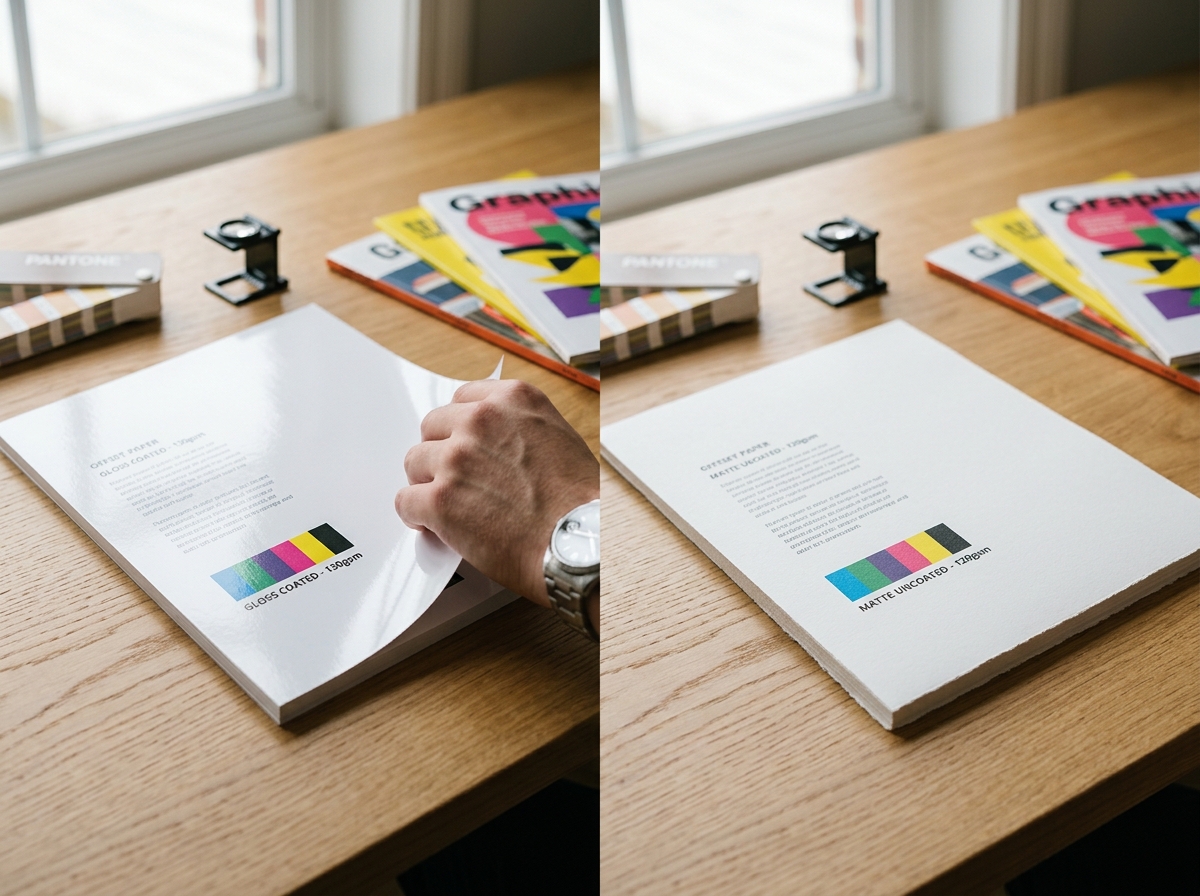
What Is the Difference Between Coated and Uncoated Paper?

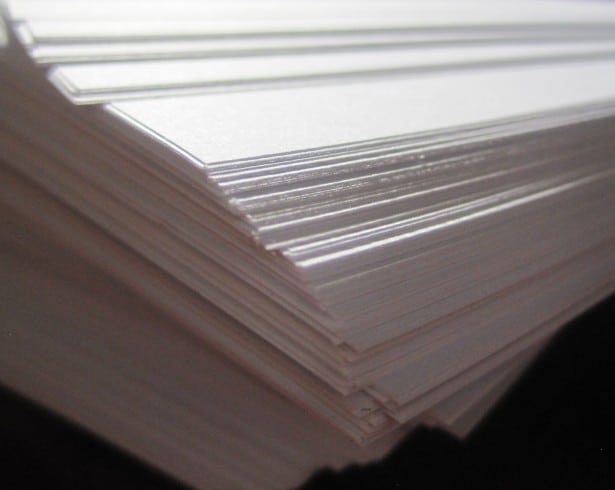
Coated paper is paper stock treated with a layer of clay, plastic, or other compounds that seal the surface, while uncoated paper has no surface treatment and retains a natural, porous texture. This single distinction—the presence or absence of a coating—drives nearly every difference in print quality, ink absorption, texture, and cost between the two paper types. Understanding coated vs uncoated paper is the first step in choosing printing paper for any project, from business cards to magazine printing.
Why the Coated vs Uncoated Distinction Matters
Paper finish affects how ink sits on the page, how colors reproduce, and how a printed piece feels in someone’s hands. According to industry printing standards used since the early 2000s, coated stocks typically deliver higher print vibrancy and sharper detail, while uncoated stocks offer better ink adhesion for writing and a more tactile, premium feel. Choosing the wrong paper stock can result in smudged ink, dull colors, or a finished product that doesn’t match a brand’s intended tone. For a deeper breakdown of coated vs uncoated paper, professional printers often recommend testing both options before finalizing a large print run.
Key Characteristics of Coated Paper

Coated paper stock is defined by a mineral or polymer layer applied during manufacturing at the paper mill. This layer changes how the sheet interacts with ink and light.
- Clay coating: Most coated paper uses a kaolin clay coating that fills in the paper’s natural fibers, creating a smoother printing surface.
- Gloss coating: Produces a shiny, reflective surface that maximizes print vibrancy and color reproduction on paper.
- Matte coating: Delivers a smooth but non-reflective surface, reducing glare while preserving sharp detail.
- Satin finish: A middle-ground option, satin vs gloss paper comparisons show satin offers moderate sheen with reduced fingerprint visibility.
- Lower ink absorption: Coated stocks limit ink absorption, keeping ink on the surface for crisper, more vibrant printed images.
Key Characteristics of Uncoated Paper
Uncoated paper retains its natural fiber structure, resulting in distinct handling and printing behavior compared to coated stock.
- Higher porosity: Uncoated paper texture allows ink to soak into the fibers, which is ideal for writing and stamping.
- Natural texture: Uncoated paper texture and feel is often described as soft, warm, or tactile—popular for letterhead and stationery.
- Higher ink absorption: Because there’s no barrier layer, uncoated paper vs coated paper printing quality differs; colors can appear slightly softer or less saturated.
- Eco-friendly uncoated paper options: Many uncoated stocks use recycled fibers, making them a common choice for sustainability-focused print projects.
- Better for pencil and pen: The benefits of uncoated paper for writing include reduced smudging and better pen grip.
How Paper Coating Works
The process of turning raw pulp into finished coated or uncoated paper stock happens at the paper mill in several defined steps.
- Pulp formation: Wood fibers are processed into pulp, then pressed into continuous sheets.
- Base sheet drying: The raw sheet is dried and measured for paper weight and paper thickness.
- Coating application (coated paper only): A clay coating, gloss coating, or matte coating is applied to one or both sides of the sheet.
- Calendering process: The sheet passes through heated rollers under pressure, which smooths the surface and, for coated stocks, sets the gloss or matte level.
- Cutting and grading: Sheets are cut to size and graded by brightness rating, opacity, and paper finish before being shipped for use in offset printing, digital printing, or specialty applications like photo paper.
This calendering process is the mechanical step that determines final paper smoothness. Uncoated paper skips the coating application step entirely, which is why it retains a rougher, more porous printing surface.
Common Misconceptions About Coated and Uncoated Paper
Myth: Coated Paper Is Always Better Quality
Reality: Coated paper isn’t inherently superior—it’s suited to different jobs. Uncoated paper often outperforms coated stock for handwriting, stamping, and eco-friendly packaging because of its higher ink absorption and natural texture.
Myth: Matte Coating Means No Coating
Reality: Matte coating is still a coating—it uses the same clay coating base as gloss but is calendered differently to reduce shine. This is a key point in any glossy vs matte paper comparison.
Myth: Coated Paper Is Always More Durable
Reality: Paper durability depends on paper weight and stock composition, not just coating. A heavy uncoated cardstock can outlast a thin coated sheet.
Myth: Uncoated Paper Can’t Be Used for Photos
Reality: While glossy paper and satin photo paper dominate professional photography prints, some uncoated fine-art papers are specifically engineered for archival photo printing.
Coated vs Uncoated Paper: Direct Comparison
| Feature | Coated Paper | Uncoated Paper |
|---|---|---|
| Surface | Smooth, sealed with clay/gloss/matte coating | Natural, porous, textured |
| Ink Absorption | Low; ink stays on surface | High; ink soaks into fibers |
| Print Vibrancy | High color reproduction on paper | Softer, muted color output |
| Best Print Method | Offset printing, some digital printing | Laser printing paper, inkjet printer paper compatibility |
| Common Uses | Magazine printing, brochures, glossy photo paper | Letterhead, stationery, business documents |
| Feel | Slick, reflective | Soft, tactile, matte |
| Cost | Generally higher due to coating process | Generally lower; simpler manufacturing |
| Eco Factor | Less recyclable due to coating layer | More recyclable and eco-friendly paper option |
Gloss vs Matte Paper: A Closer Look
In any glossy vs matte paper debate, gloss finish printing produces the highest print vibrancy and is favored for magazine printing and marketing materials. Matte finish printing, by contrast, reduces glare and fingerprints, making it a favorite for professional documents and presentation folders. Satin finish sits between the two, offering a subtle sheen without heavy reflectivity—commonly chosen for photo paper and premium brochures.
Practical Applications: Choosing Printing Paper by Project
Coated Paper Uses
- Magazine and catalog printing, where color reproduction on paper is critical
- Glossy brochures and marketing materials that need high print vibrancy
- Photo paper for professional photography prints
- Coated business cards that require a polished, premium look
Uncoated Paper Uses
- Letterhead and stationery, where ink adhesion for pens matters
- Legal and business documents requiring a professional, non-glare finish
- Direct mail marketing pieces designed for a tactile, approachable feel
- Eco-friendly uncoated paper for sustainability-branded packaging
Coated vs Uncoated Paper for Business Cards
When comparing paper for business cards, coated cardstock with a gloss or satin finish tends to look more vibrant and professional under store lighting. Uncoated cardstock, however, allows for easy handwriting on the back and a softer, more approachable texture—an important factor for boutique or artisanal brands.
Best Paper Type for Brochures: Coated or Uncoated?
For brochures featuring bold photography, coated paper with gloss or satin finish typically wins due to superior print vibrancy. For brochures emphasizing text and a premium, understated aesthetic, uncoated stock with a heavier paper weight often performs better.
How to Choose Between Coated and Uncoated Paper
- Identify the printing press or printer type: Offset printing handles both types well, while inkjet printer paper compatibility often favors coated stock for photo-quality output.
- Consider paper weight and thickness: Heavier cardstock (80lb+) suits business cards and cover pages; lighter stock suits interior pages.
- Match the finish to the message: Choose gloss coating for vibrant marketing pieces, matte coating for professional documents.
- Factor in cost: Coated paper vs uncoated paper cost comparison generally shows coated stock costs 10–20% more due to the coating process.
- Evaluate sustainability needs: Choose recyclable, eco-friendly uncoated paper when environmental impact is a priority.
As of 2025, most commercial print shops stock both coated and uncoated paper in multiple brightness ratings and weights, giving businesses flexibility to match paper finish to brand identity and budget.