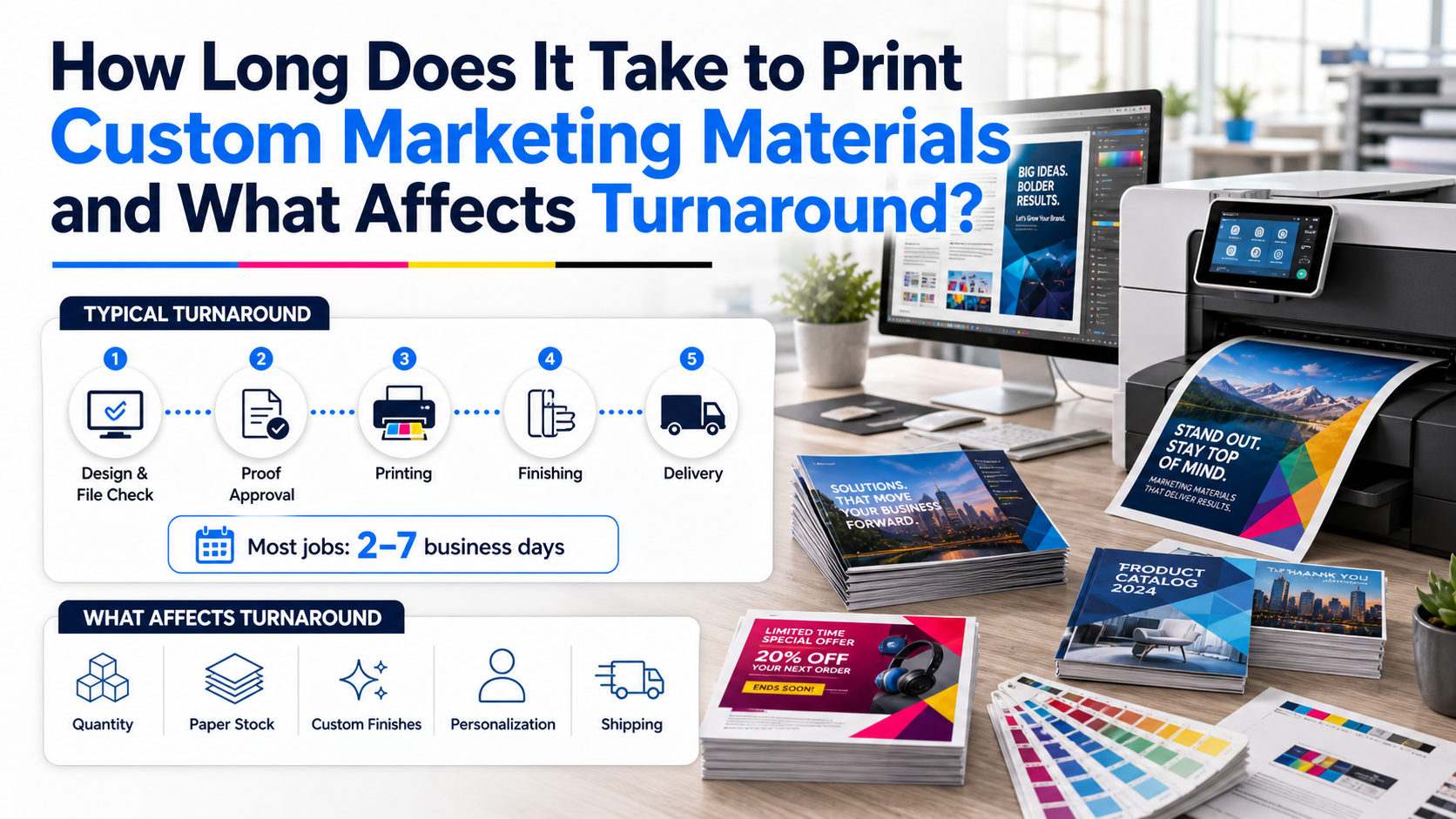
How to Determine Custom Marketing Material Turnaround Time: Complete Guide
Custom printing for marketing materials typically takes between 1 to 10 business days, depending on the printing method, material type, quantity, and finishing requirements. According to industry standards (Print Industries of America, 2024), digital printing allows for faster turnaround than offset printing, with same day printing available for simple projects and two-week production timelines common for complex custom collateral printing.
Before You Begin: Prerequisites
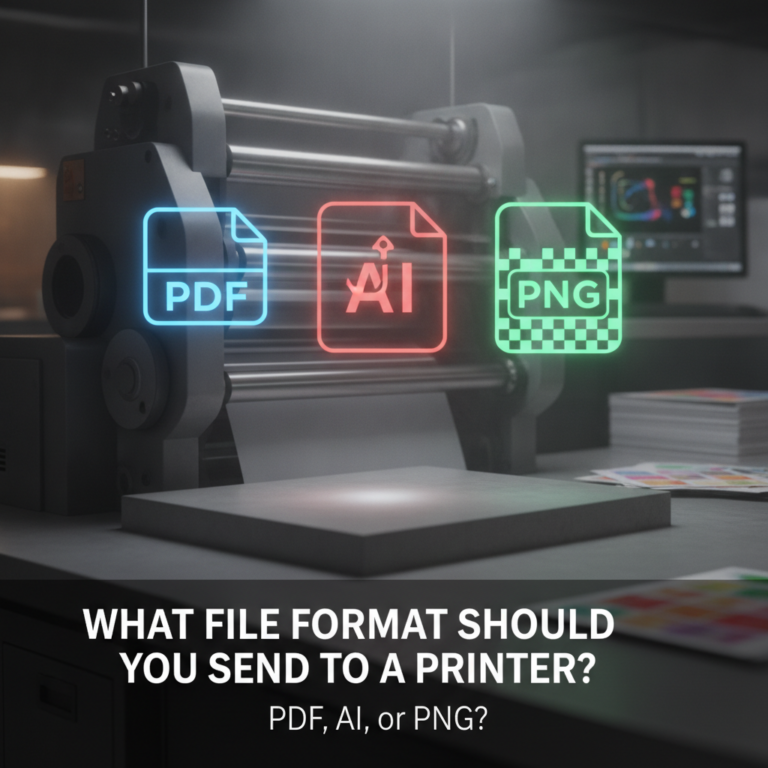
- Finalized design files in print-ready format (PDF, AI, or EPS)
- Clear print specifications (dimensions, paper stock, quantities)
- Approval authority for proofing and revisions
- Budget allocation for printing timeline (standard vs rush printing services)
- Understanding of your distribution deadline
Difficulty Level: Beginner to Intermediate | Time Required: 15-30 minutes for planning, plus production time
Step 1: Understanding Standard Print Turnaround Times by Material Type

The printing timeline varies significantly based on the promotional print products you select. A print shop categorizes jobs by complexity, which directly influences the production time.
Common Marketing Materials and Their Standard Turnaround
Business cards typically require 2-5 business days for digital printing and 5-7 business days for offset printing with special finishes. Standard size business cards (3.5″ x 2″) print faster than die cut business cards with custom shapes, which add 2-3 days to the printing duration.
Flyers and brochures generally take 3-5 business days for standard turnaround. According to commercial printing benchmarks (Printing United Alliance, 2024), full color printing on gloss finish or matte finish paper stock maintains this timeline, while custom folding configurations may extend production by 1-2 days.
Posters and banners produced through large format printing require 3-7 business days. Large format timing depends on substrate type—vinyl graphics cure faster than canvas materials. Trade show displays with mounting and lamination need 7-10 business days minimum.
Catalogs and booklets involve more complex bindery services. Saddle stitch vs perfect binding time differs by approximately 2 days, with catalogs typically requiring a one-week turnaround for quantities under 1,000 units.
| Material Type | Digital Printing Speed | Offset Printing Time |
|---|---|---|
| Business Cards | 2-3 days | 5-7 days |
| Flyers & Postcards | 1-3 days | 3-5 days |
| Brochures (tri-fold) | 3-4 days | 5-7 days |
| Posters (up to 24″x36″) | 2-4 days | 5-8 days |
| Catalogs (20+ pages) | 5-7 days | 7-14 days |
Step 2: Identifying Turnaround Factors and Production Time Influences

Multiple timeline affecting factors determine your final delivery schedule. Understanding these turnaround variables helps set realistic printing deadlines.
Printing Method Selection Impact
Digital printing offers the fastest printing options for quantities under 500 units. A prepress technician prepares files in 1-2 hours, and inkjet printing or laser printing produces results within 24-48 hours. Unlike digital printing, offset printing requires plate creation, which adds 1-2 days to the prepress workflow but delivers superior quality for bulk order timeline projects exceeding 1,000 units.
Screen printing for promotional materials like stickers and labels requires 5-7 business days due to screen preparation and ink drying time between colors. Letterpress and embossing demand specialized equipment availability, typically extending timelines to 7-10 days.
Quantity Impact on Time and Production Capacity
Small run printing time remains consistent regardless of whether you order 50 or 500 business cards with digital printing. However, bulk quantities (5,000+ units) benefit from offset printing time efficiency despite longer initial setup. According to production capacity studies (Graphic Communications, 2024), print queue management affects order volume processing during seasonal demand periods like holiday marketing campaigns.
Finishing Effects on Timing and Post-Press Operations
Custom finishing effects significantly influence the printing production cycle. Standard cutting and trimming add 4-8 hours, while specialty techniques require additional time:
- Lamination process: Adds 1-2 days for coating application and curing
- Die cutting time: Requires 2-3 days for custom die creation plus cutting
- Embossing duration: Adds 2-4 days for die production and pressing
- Foiling process: Extends timeline by 3-5 days for foil stamping setup
- UV printing: Adds 1 day for specialty UV coating and instant curing
Design Complexity Timing and File Preparation Time
Complex designs with Pantone color printing require color matching and proofing timeline extensions of 1-2 days. Full color vs spot color speed differs minimally in digital workflows but impacts offset printing significantly. A graphic designer should provide files that pass prepress processing without revision delays, as each proof approval cycle adds 24-48 hours to print job complexity timelines.
Material Selection and Material Availability
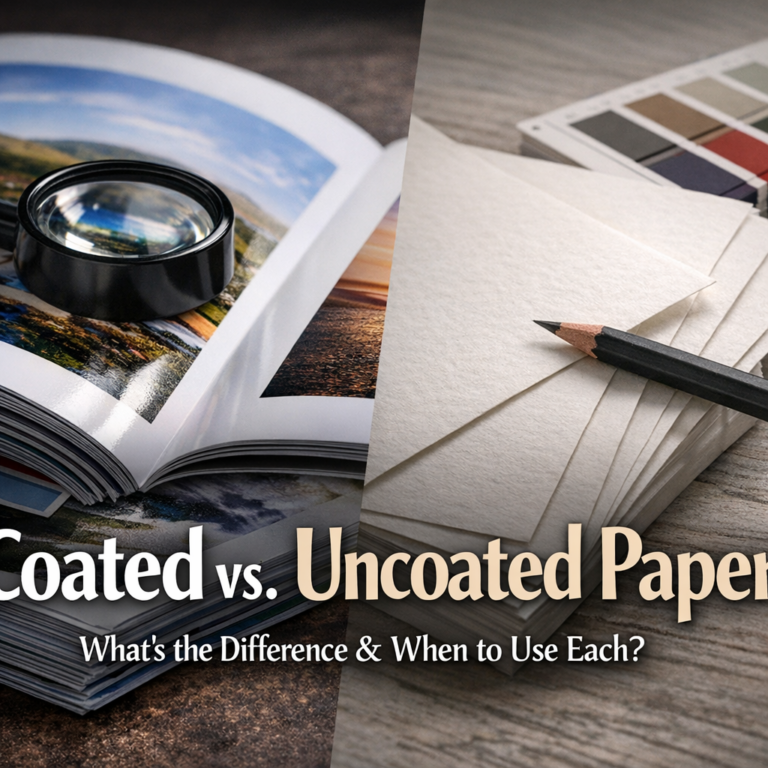
Paper inventory directly affects production delays. Standard cardstock (80-110 lb) ships from paper stock suppliers within 1-2 days. Specialty papers, textured stocks, or custom vinyl graphics materials may require 3-7 days for material availability, creating printing bottlenecks. Working with Replica Printing provides access to an extensive paper inventory that minimizes substrate procurement delays.
Step 3: Preparing Files and Specifications to Minimize Production Delays
Proper design preparation directly reduces the print lead time by eliminating revision time needed during production.
File Setup Best Practices
- Export designs as high-resolution PDFs (300 DPI minimum) with embedded fonts
- Include 0.125″ bleed on all edges for materials requiring cutting
- Convert all colors to CMYK for accurate color proofing
- Provide actual-size dimensions matching final print specifications
- Include crop marks and safety margins for presentation folders and multi-page documents
A production manager reviews files within 2-4 hours of submission. Files requiring corrections extend the approval process duration by 24 hours per revision cycle. According to prepress workflow standards (National Association for Printing Leadership, 2024), 40% of production time influences stem from inadequate file preparation time.
Step 4: Working with Your Printing Company for Optimal Print Fulfillment Time
Collaboration with your print shop establishes realistic time needed to print custom marketing materials expectations.
Communication with Print Production Workflow Teams
Contact the production manager or customer service representative 48-72 hours before your absolute deadline. Discuss:
- Current machine capacity and print queue status
- Equipment availability for specialty techniques (flexography, lithography, UV printing)
- In-house printing timeline benefits vs outsourced printing lead times
- Local printer vs online turnaround advantages for your location
A quality control inspector examines output before shipping. Build quality control into your printing production cycle by allowing 4-8 hours for inspection of door hangers, rack cards, and other direct mail pieces.
Delivery Options and Transit Time Planning
Shipping method selection impacts final delivery. Ground shipping vs air freight timing differs by 2-7 days depending on distance. Standard delivery options include:
- Same day printing with local pickup (available for simple jobs under 250 units)
- Next day printing with overnight shipping (adds $25-75 to costs)
- 48-hour turnaround with 2-day shipping
- 72-hour printing with standard 3-5 day ground transit
Step 5: Choosing Rush Printing Services and Express Printing Options
When printing deadlines compress, expedited printing services accommodate tight marketing collateral needs.
Rush Order Availability and Costs
Rush print jobs typically incur a 25-50% rush printing surcharge vs timeline but compress production to 24-48 hours. Overnight custom printing availability exists for letterhead, envelopes, notepads, and standard business cards. According to pricing analyses (Print Buyers Online, 2024), the rush printing surcharge vs timeline tradeoff proves cost-effective when last-minute promotional material printing prevents revenue loss.
Same Day Printing Limitations
Same day printing applies to:
- Digital-only production (no offset printing)
- Quantities under 500 units
- Standard sizes without custom die cutting
- No specialty finishing (lamination, embossing, foiling)
- Files submitted before 10 AM local time
A branding agency requiring trade show materials should request overnight printing or 48-hour turnaround for materials with binding, folding, or coating.
Troubleshooting Common Print Project Timeline Issues
Address these frequent problems that create printing bottlenecks:
If Your Print Queue Position Causes Delays
Contact the printing company to discuss upgraded priority status. During seasonal demand peaks (November-December, back-to-school periods), standard turnaround extends by 2-3 days. Request express printing designation to bypass queue congestion.
If Design Complexity Affects Print Time Unexpectedly
Simplify finishing requirements. Switch from embossing impact on production timeline to standard printing with digital effects. Replace die cutting with standard rectangular cuts. Each finishing compromise reduces production time by 1-3 days.
If Material Availability Delays Production
Request substrate alternatives from available paper stock. Most printing technology accommodates multiple paper weights and finishes. A prepress technician can recommend comparable materials in stock that maintain brand consistency.
If Proof Approval Impact on Turnaround Becomes Critical
Establish 4-hour approval windows. Designate a marketing department contact with approval authority to prevent revision delays in print production. Consider waiving physical proofs for digital-only color proofing when time constraints require maximum printing speed.
If Packaging Time for Print Orders Threatens Deadlines
Request direct shipment to multiple locations rather than consolidated packaging. Split large orders into smaller boxes for faster processing. Coordinate with the bindery services team to begin fulfillment before entire job completion.
Next Steps: Planning Future Marketing Print Services
Implement these strategies for improved print order processing efficiency:
- Maintain a production calendar: Track how long for custom banner printing, typical lead time for catalog printing, and other recurring jobs to establish baseline expectations
- Build vendor relationships: Establish partnerships with commercial printing companies to secure priority during high-volume periods
- Create file templates: Standardize business card printing, letterhead, and sticker designs to reduce file setup errors
- Stock common materials: For frequently used promotional print products, maintain inventory of pre-printed shells requiring only variable data printing
- Plan 30% time buffers: Always add contingency to printing duration factors for unexpected revisions or material shortages
Understanding custom print job timelines protects your advertising print materials campaigns from delivery failures. Whether selecting small quantity printing speed for test campaigns or bulk order timelines for nationwide distribution, accurate time estimates for marketing material production ensure your promotional materials arrive when customers need them.